










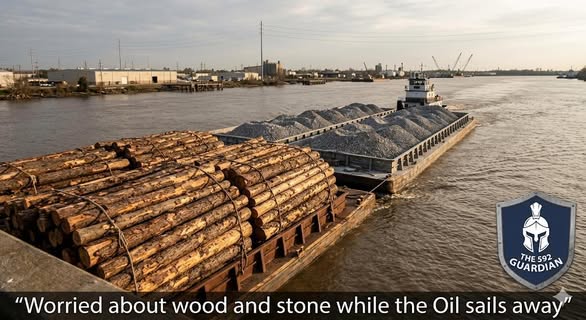
In an era when transactional diplomacy has become the global norm, Guyana must respond not with indignation or insularity, but with pragmatism, foresight, and the courage to see opportunity in adversity. President Irfaan Ali’s formal protest against Suriname’s decision to impose fees on vessels using the Corentyne River has ignited fierce debate, not just between Georgetown and Paramaribo, but among business chambers and trade advocates across the country. Yet amid the noise, one truth is clear — Guyana’s private sector has once again failed the test of vision.
Every major chamber and business commission has rushed to condemn Suriname’s move as protectionist, a knee-jerk reaction that reveals more about their own lack of imagination than any policy flaw across the border. True entrepreneurs understand that obstruction breeds innovation; real opportunity often hides where others see crisis. Adversity has always been the cradle of invention — but Guyana’s business elite appear more inclined toward complaint than creativity.
Let us not forget that “choke points” — those strategic intersections of trade, geography, and influence — have become the modern vocabulary of economic power. From Singapore to Panama, nations have turned location into leverage, converting geography into sustained prosperity. Ironically, while many Guyanese business leaders parrot Singapore’s success story, few seem to grasp the essence of that transformation. Singapore had no oil wells or forests to sell — only an unyielding supply of political will. Today, Suriname is demonstrating a similar temperament, employing its natural geography to create long-term fiscal gain. Why should Guyana begrudge such sovereign pragmatism?
Even more troubling is the hypocrisy underlying the local outrage. The same voices that decry Suriname’s assertion of sovereignty have remained curiously silent about Guyana’s own surrender of it — most glaringly in the oil sector. Our government, perched on a mountain of potential revenue, has timidly refused to implement a windfall tax, surrendering the nation’s fiscal destiny to ExxonMobil. The nation’s “captured state” has become an open secret, and yet the same business elites — who howl at Suriname’s tolls — have nothing to say about the most lopsided contract in modern times.
This duplicity must be called out, not just in political halls, but within the ethos and logos that define The 592 Guardian. Guyana’s future depends on leaders — both public and private — who can see beyond their limitations, who understand that sovereignty, economic innovation, and transactional diplomacy are not adversaries but allies. When protectionism meets pragmatism, we must choose courage over comfort. That is the real lesson in this moment — and the test of our national maturity.